
gokenin
- Civilization
- Japan
- Period
- c. 1280 AD
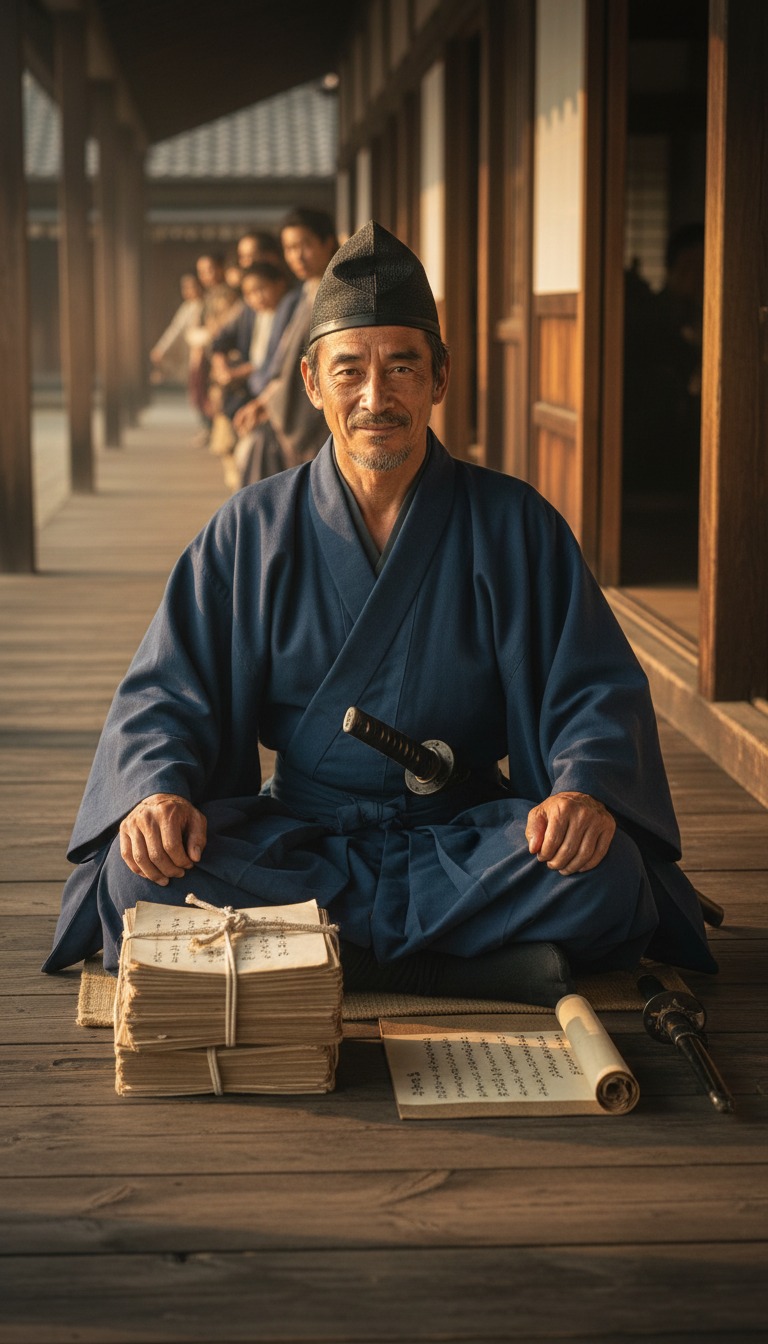
Gokenin, men of the house, were the vassal warriors of Japan's Kamakura shogunate, 1185 to 1333. The relationship was a bargain: the gokenin served the shogunate in war and guard duty, and the shogunate confirmed and protected their landholdings. In samurai Japan, protecting rights in land meant adjudicating them, so the warrior government ran, to a striking degree, as a courthouse.
The paper trail is enormous: petitions, rejoinders, summonses, sworn statements, judgments and appeals. The shogunate's own law code of 1232, the Goseibai Shikimoku, devotes much of its fifty-one articles to land, inheritance, evidence and the penalties for abusive litigation, including the default judgment that follows three ignored summonses. The samurai of legend fights duels. The gokenin of the documents files lawsuits.
After the Mongol invasions of 1274 and 1281, reward claims had to be argued like everything else. The gokenin Takezaki Suenaga commissioned an illustrated scroll of his deeds to support his claim, and it worked: the scroll shows the horse he received.
See the job lived
Sources
- Goseibai Shikimoku (1232), arts. 14, 29–31, 35 — summonses, default after three ignored summonses, delay complaints, appeals, judicial bias
- Jeffrey P. Mass, The Kamakura Bakufu: A Study in Documents (1976) — 177 translated Kamakura edicts and land records
- Thomas D. Conlan, In Little Need of Divine Intervention (2001) — Takezaki Suenaga's scrolls and the reward-claim process