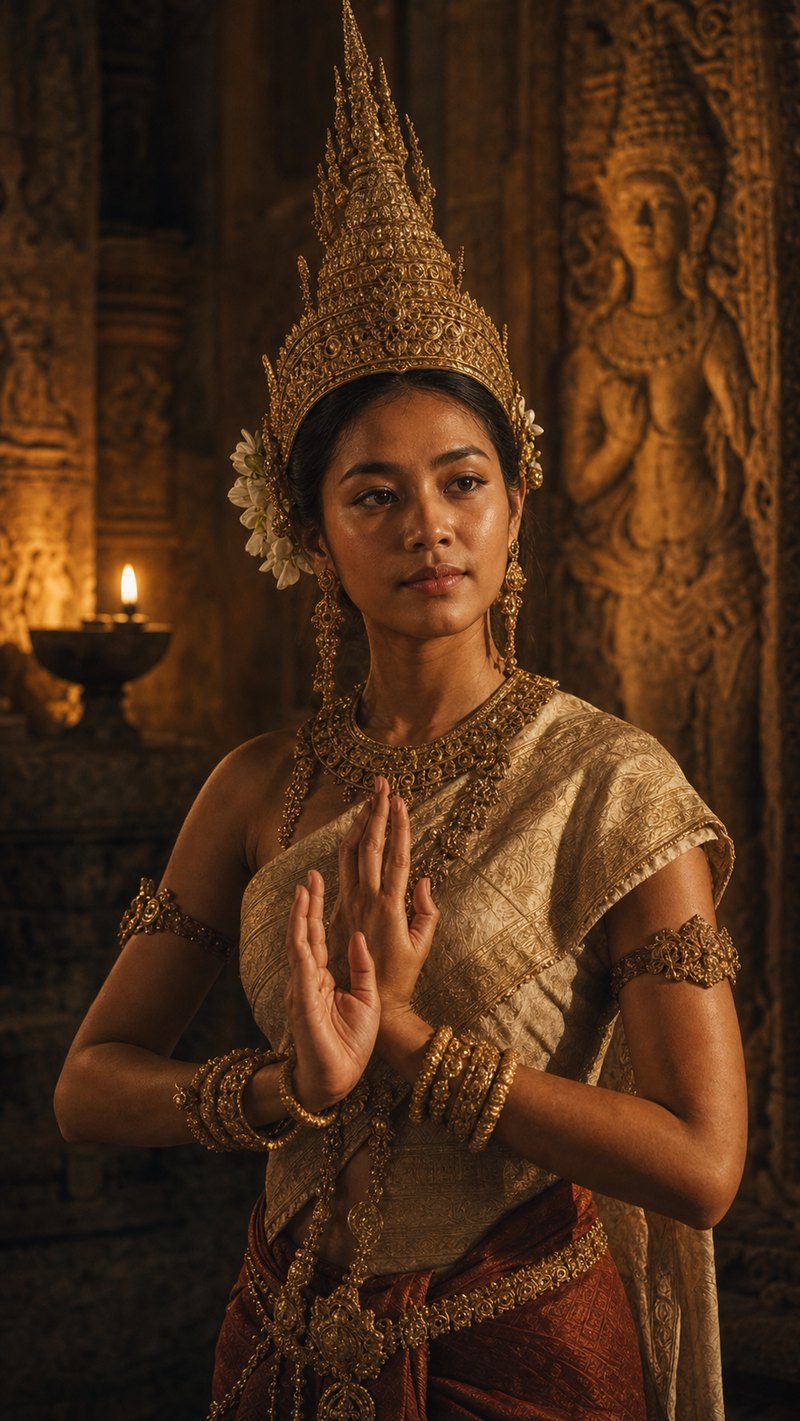
apsara
- Civilization
- Khmer
- Period
- c. 1150 AD
An apsara is a celestial dancer of Hindu and Buddhist tradition, a heavenly nymph who dances for the gods. At Angkor the word is everywhere in stone: more than seventeen hundred female divinities are carved into Angkor Wat alone, with thousands more across the Bayon, Preah Khan and the other temples of the complex.
Behind the carvings stood a living institution. Khmer temple charters count real dancers among temple personnel: the foundation stele of Ta Prohm, set up in 1186, lists 615 of them, dedicated to the sanctuary as a standing offering alongside land, cattle and rice. One caution scholars keep on the label: most of the carved figures are celestial nymphs and goddesses of the decorative program, not portraits of the living dancers in the charters.
Classical Khmer dance grows from this root, and the carved poses are still held: the Metropolitan Museum of Art keeps a Bayon-style pillar with two dancing apsaras poised on lotus flowers.