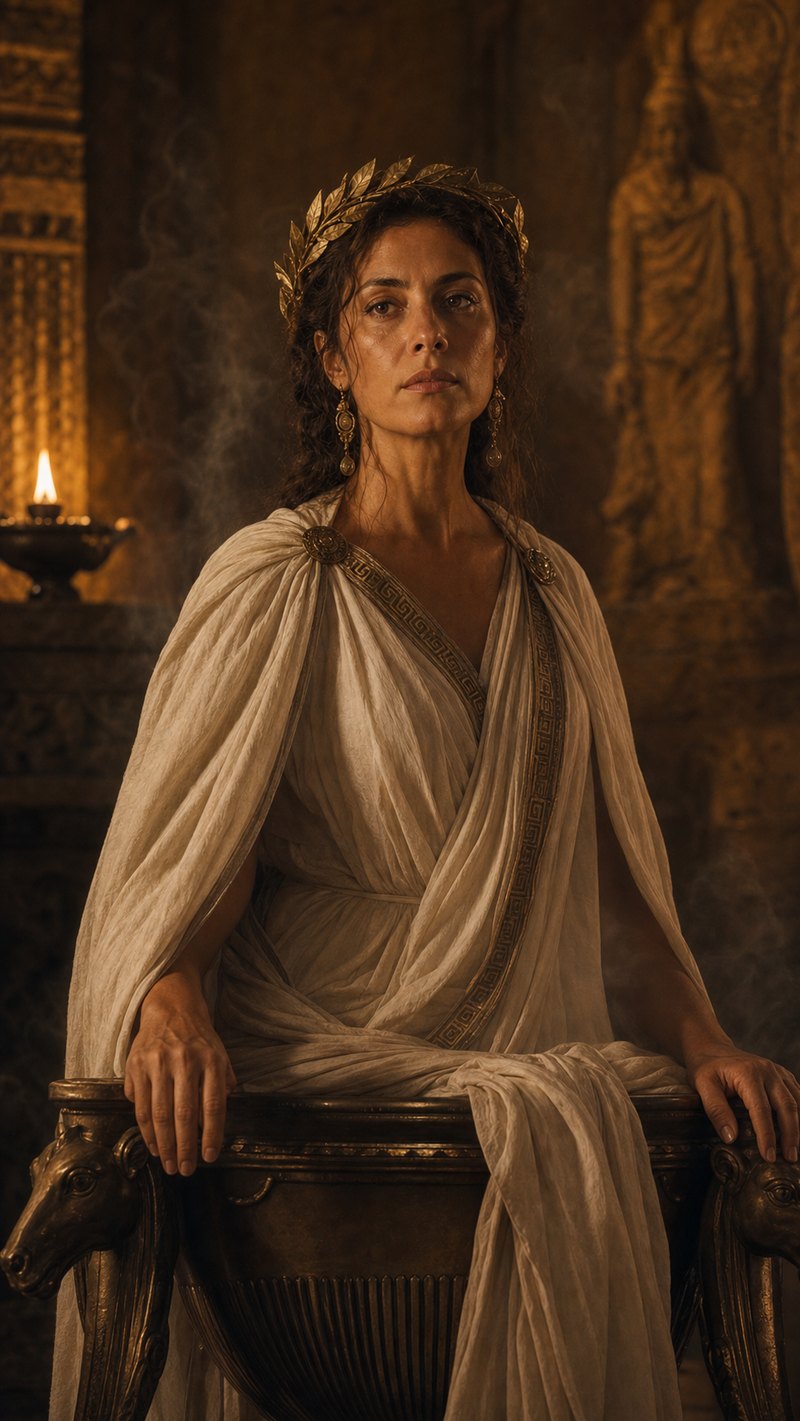
The Dancers Who Were Offerings
- Civilization
- Khmer
- Occupation
- Apsara — consecrated temple dancer
- Material
- Sandstone & gold
- Period
- c. 1150 AD
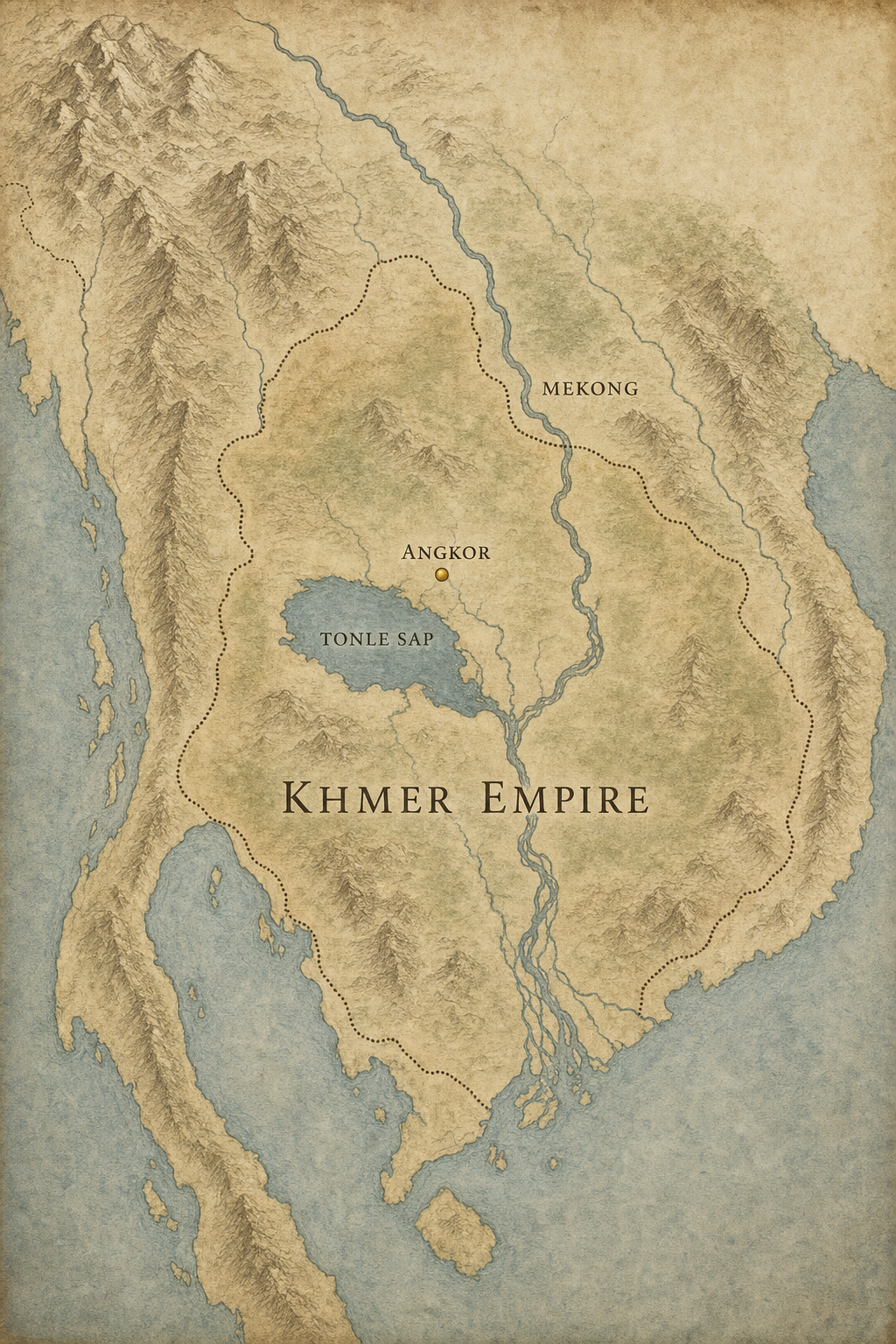
615 dancers in a single temple, counted in the stone of its founding charter. An apsara was not an entertainer but a standing offering — her dance a rite performed for the god. The jungle later swallowed the temples, but carved dancers still hold the pose on the walls of Angkor Wat.
The job
At the height of the Khmer Empire, great temples were run like small cities. Among the priests, cooks, and rice-farmers listed in their founding charters were hundreds of dancers, women attached to a single sanctuary as part of its endowment. The foundation stele of Ta Prohm, set up in 1186 under Jayavarman VII, counts 615 dancers among more than 12,600 temple personnel; a comparable stele at nearby Preah Khan records around a thousand. Giving dancers to a temple was itself an act of religious merit. A dancer was not a hired entertainer but a standing offering, dedicated to the deity alongside land, cattle, and stores of rice.
Dancing for the gods
These women danced as a rite. The movement was an offering made before the image of the enshrined god, one of the temple's regular services rather than a public show. Even so, the clean line between dancing for gods and dancing for people did not really exist at Angkor. The king was treated as semi-divine, and temple, palace, and court overlapped. Classical Khmer dance grows from this same root and later became a royal art. It is safest to say the temple dancers performed as a sacred offering, not that they never appeared before human eyes.
How we know
Almost everything comes from stone. Khmer inscriptions in Sanskrit and Old Khmer list temple staff with bureaucratic care. The French scholar George Coedès translated the Ta Prohm stele in 1906, which is where the figure of 615 comes from. Other inscriptions show the same institution over time, from a modest seventeen dancers given to a Chenla-era temple to more than 1,600 credited to Jayavarman VII.
The walls are a second archive. In the 1920s Sappho Marchal catalogued the female figures carved across Angkor Wat, recording their hair, jewellery, and dress, and argued that these matched real Angkorian fashion. One caution belongs on the label: most of the carved figures are celestial nymphs and standing goddesses, part of a religious decorative program, and should not be read as literal portraits of the living dancers named in the charters.
Where to see it
More than seventeen hundred female divinities are carved into Angkor Wat alone, with thousands more across the Bayon, Preah Khan, and other temples of the complex. Most remain in place on the sandstone. Fragments also reached museum collections. The Metropolitan Museum of Art holds a Bayon-style pillar carved with two dancing apsaras poised on lotus flowers, a close view of the style that covers the temples at Angkor.
Sources
- Georges Coedès — La stèle de Ta-Prohm (1906), Bulletin de l'École française d'Extrême-Orient 6: 44–86
- Jukka O. Miettinen — Dance and Theatre in the Civilization of Angkor (2018), Asian Traditional Theatre & Dance, University of the Arts Helsinki
- Devata.org — on Sappho Marchal's Costumes et parures khmers d'après les devatâ d'Angkor-Vat (1927)
- Devata.org — Angkor Wat Devata Inventory (~1,796 female figures)
- The Metropolitan Museum of Art — Pillar Fragment with Dancing Apsaras, Cambodia, Angkor period (Bayon style)
- Asia Society — Dance and Drama on Cambodian Temples
Tell us in the comments — the next episode is picked from what you ask for.
Subscribe on YouTube Watch the seriesMore from the series
The Bead-Borers of the Indus Valley
The Masons Who Freed a Building from a Cliff