Tyrian purple
- Civilization
- Carthage
- Period
- c. 300 BC
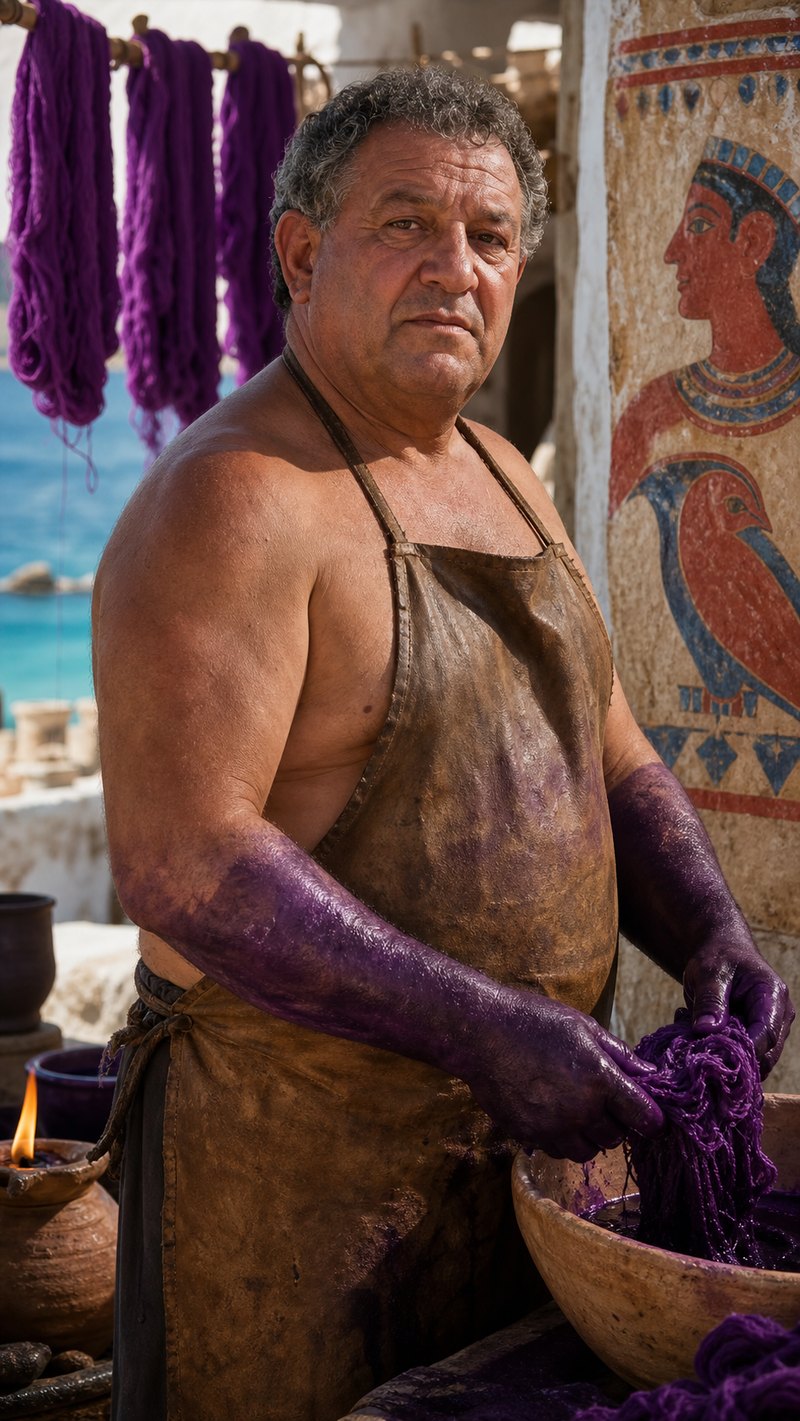
Tyrian purple is the dye of the murex, a predatory Mediterranean sea snail. From a gland in each animal comes a few drops of clear fluid that turn, in air and sunlight, into a purple so deep and so fast it never truly fades. The active compound is 6,6'-dibromoindigo, a relative of common indigo carrying two bromine atoms, part of why the colour grips fibre and holds against light and washing.
The cost lay in the arithmetic. In 1909 the chemist Paul Friedlander processed the glands of about twelve thousand murex to obtain 1.4 grams of pure pigment, enough to dye little more than the border of a garment. Law and custom reserved the deepest shades for kings, Roman emperors and the highest elite, and the old phrase for imperial legitimacy, born to the purple, is Byzantine.
The colour outlived every empire that guarded it. Carthage's dye works have their own episode, and the export ban shows up at its sharpest a millennium later, in the 968 customs seizure of five purple silks.
See the job lived
Sources
- Cooksey, C. J. — Tyrian Purple: 6,6'-Dibromoindigo and Related Compounds (2001), Molecules 6(9): 736–769
- Ritter, S. & Ben Tahar, S. (eds.) — Studies on the Urban History of Meninx (Djerba): The Meninx Archaeological Project 2015–2019 (2022), Deutsches Archäologisches Institut
- Cartwright, M. — Tyrian Purple (2016), World History Encyclopedia