The City That Could Only Be Fed After Dark
- Civilization
- Rome
- Occupation
- Mulio (night-freight muleteer)
- Material
- Basalt paving, oak wagons, mule harness, oil amphorae
- Period
- 1st century BC law, staged c. 1st century AD
Rome solved its daytime traffic the way no modern city would dare: it banned wheeled freight from the streets between sunrise and mid-afternoon. The rule survives, cut into a bronze tablet. Its consequence was a nocturnal workforce — the muliones, muleteers driving loaded wagons through the dark — and a soundscape the poet Juvenal said made sleep in Rome a luxury only the rich could afford.
A city fed against the clock
Imperial Rome, the largest city of the Roman empire, held on the order of a million people inside its walls, and almost nothing they ate or burned or built was made there. Grain came by sea from Africa and Egypt, olive oil from southern Spain over the Roman roads from the ports, stone and timber down the Tiber — and all of it had to cross the last mile through streets barely wide enough for a single cart. The city's answer was a law that would be unthinkable now: keep the wagons out of the streets while the sun is up.
What that produced was an inversion most Romans never remarked on and most histories skip. The grandeur happened by day; the actual feeding of the city happened at night, in the dark, on the backs of a workforce nobody carved onto a triumphal arch.
The law on the bronze
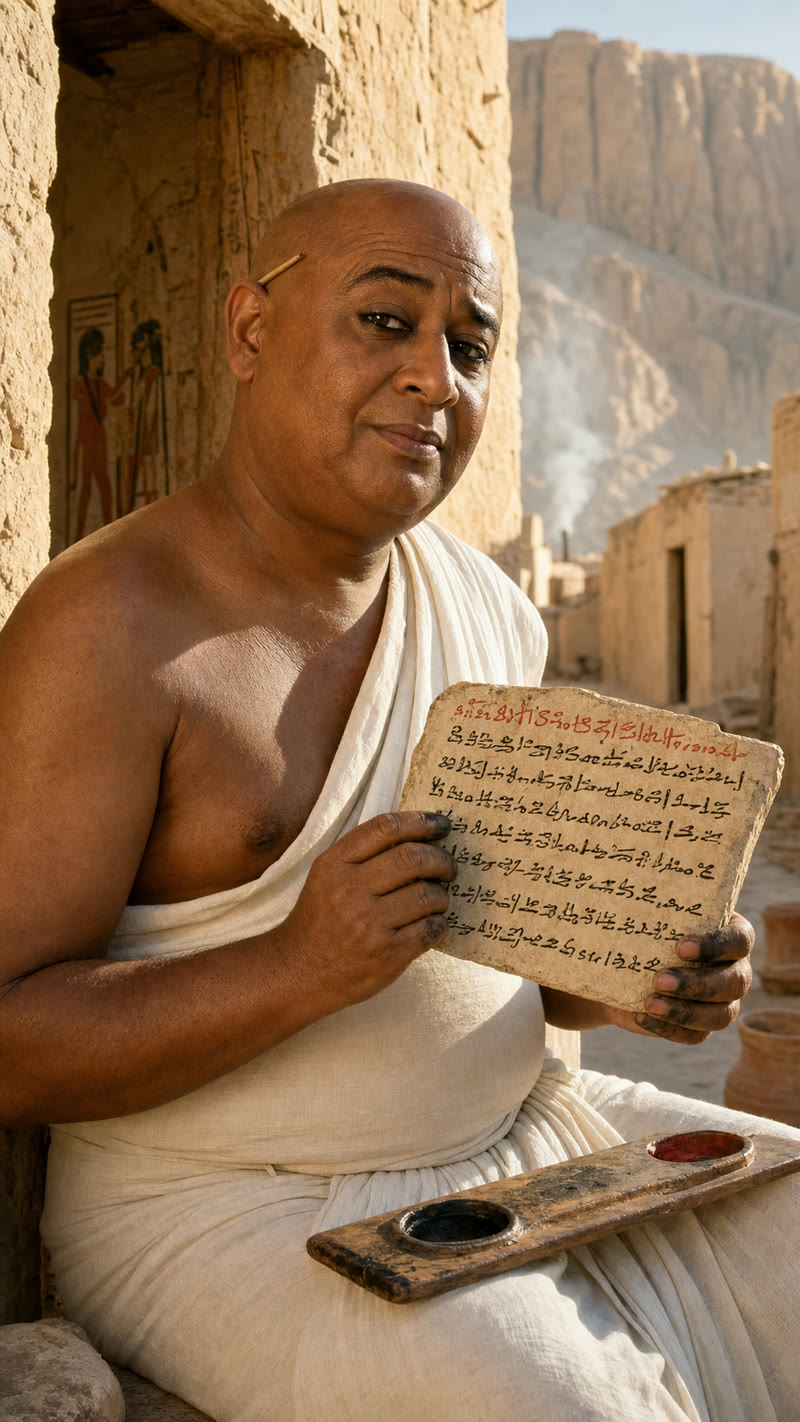
The rule survives in the most durable form the Roman state had: cut into a bronze tablet, the Tabula Heracleensis. Within the continuously built-up area of Rome, it orders, no one is to drive or lead a loaded wagon from sunrise until the tenth hour of the day — mid-to-late afternoon, by the Roman reckoning that split daylight into twelve hours whatever the season. The date is debated; the text is conventionally, but not securely, tied to Caesar's reforms of the 40s BC. Its authority is not.
The clause is not a blanket ban — it lists exceptions for temple building, for public demolition, for the wagons of the Vestals and for triumphs and games. And its own wording gives the game away: it makes provision for wagons "brought into the city at night," and for their leaving empty at dawn. The law does not order that everything be delivered after dark. But by closing the streets to freight through the working day, it pushed the ordinary business of supplying Rome into the evening, the night and the small hours.
A fortune to sleep in Rome
We know what that sounded like because a professional complainer wrote it down. In his third Satire, Juvenal lists the miseries of living in the capital, and near the top is simply this: you cannot sleep. In Rome, he says, rest costs a fortune — only the wealthy, behind thick walls and set back from the street, can buy silence. The cause he names precisely: the passage of wagons through the narrow, winding streets, and the shouting and cursing when a team is brought to a stand in a jam.
It is the oldest noise complaint in Western literature that still reads as familiar, and it is aimed squarely at the night freight. The bakers were the other night shift — Martial grumbles at being kept awake by them — but it was the carts, and the drivers swearing at their stalled mules, that Juvenal blamed for the sleeplessness of the city.
The men who drove it
The drivers were the muliones — muleteers, the carters of the ancient city. The word is broad, covering anyone who handled a mule team, but the Roman jurists put them exactly where the episode does: a legal casebook preserves an accident on the Capitoline slope, where the muliones of two loaded wagons struggle to hold them on the climb, and one gives way (Digest 9.2.52.2). No single Latin title for a night-freight guild survives; these were wagon drivers and muleteers, not a chartered corporation. But they were numerous, and they knew their own worth.
The clearest proof of that is a wall. At Pompeii, among the painted electoral notices that still cover the streets, one is signed by the muliones universi — all the muleteers — asking voters to elect their candidate to office. A trade with the collective weight to endorse a politician is a trade that mattered. The freight drivers had a vote, and campaigners came looking for it.
A mountain of empties
The last-mile drivers left almost no monument of their own, with one enormous exception. Behind Rome's river port stands Monte Testaccio, a hill roughly thirty-five metres high built entirely of broken pottery — the discarded amphorae that had carried olive oil, most of it from southern Spain, into the city and been smashed and stacked once emptied. Estimates of how many jars it holds run into the tens of millions; either way it is, quite literally, a hill of a great city's packaging.
That is the true scale of what the muliones moved. A city that generated a mountain of empty oil jars had to be supplied on a scale only continuous, nightly wheeled freight could meet. The arches and the forums are what survive to be admired; the reason Rome could exist at all was the unglamorous, unslept, unthanked traffic that rolled in after the law let it — and was gone, pretending it had never been there, by the time the city woke.
Sources
- Tabula Heracleensis (the wagon-ban clause, lines 56–67), CIL I² 593 = ILS 6085; M. H. Crawford (ed.), Roman Statutes I (1996), no. 24
- Juvenal, Satire 3.232–238 — the sleepless city, the wagons in the narrow streets
- Digest 9.2.52.2 (Alfenus) — muliones handling two loaded wagons on the Capitoline slope
- CIL IV 97 — Pompeian painted election notice endorsed by the muliones universi
- Geoffrey Rickman, The Corn Supply of Ancient Rome (Oxford, 1980) — the scale of Rome's food import and the population range
- Eric Poehler, The Traffic Systems of Pompeii (Oxford, 2017) — the worn ruts, one-way streets and stepping stones of a real Roman street grid
- Monte Testaccio — the Baetican olive-oil amphora mound; Roma Capitale archaeological catalogue and the CEIPAC excavation record
Tell us in the comments — the next episode is picked from what you ask for.
Subscribe on YouTube Watch the seriesMore from the series
The Men Who Rowed Out to Harvest the Sea's Oil
The Complaint That Outlived the Merchant